The Problem Wasn’t the Septic Tank. It Was What Came After.
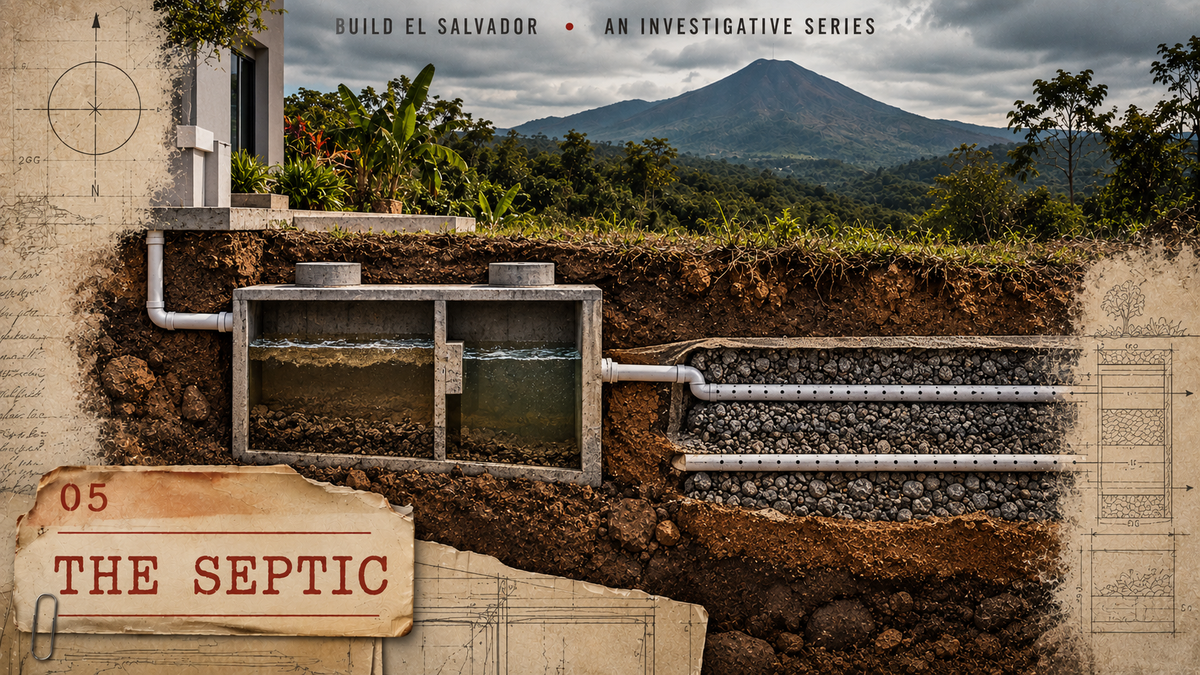
Follow along as we investigate a couple considering buying land and building a home in El Salvador. Before they buy, we're putting the property through a series of real-world tests, from what's beneath the ground to whether the land can actually support the home they imagine. Will they ultimately buy it? The file's still open.
Every day, wastewater leaves the house.
From the showers. The sinks. The toilets.
But there is no sewer waiting at the road.
So where does it all go?
The answer seemed obvious.
A septic tank.
This was a rural property with enough land for a house, and private wastewater systems are common where sewer service doesn't exist.
Except a septic tank doesn't make wastewater disappear.
It separates the solids and provides the first stage of treatment. The remaining liquid still has to go somewhere.
The tank was the easy part.
Where the water went next was the real question.
The buyer already knew a great deal about the ground beneath the proposed house.
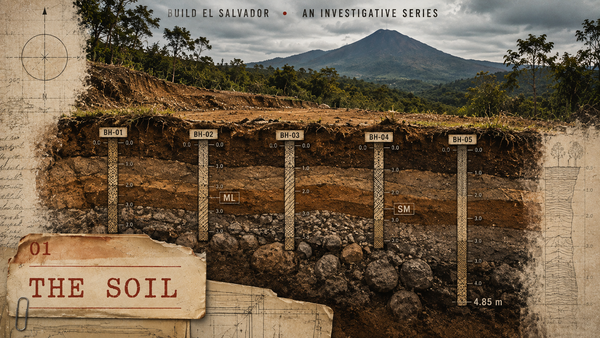
Five boreholes had been drilled across the property during the geotechnical investigation, some reaching nearly five meters below the surface. The predominant material recovered was silt with sand, with smaller amounts of silty sand and sandy silt.
That investigation had answered one question.
Could the ground support the proposed house?
Yes.
But wastewater asks the soil to do something completely different. Instead of supporting a building, the ground has to accept treated wastewater at a rate that allows the disposal system to function safely.
The boreholes had identified the soil.
They hadn't measured how water moves through it.
And that distinction matters to the permitting process.
There were actually two permitting tracks to satisfy.
The planning authority, OPAMSS, reviews the proposed development and requires sanitary authorization when an independent wastewater system is used. Its development requirements specifically contemplate septic systems where there is no sewer connection.
The sanitary side belongs to the Ministry of Health. Its job is to determine whether the wastewater can actually be treated and safely disposed of on the property.
For an individual residential wastewater system using infiltration into the soil, El Salvador's Ministry of Health requires a field permeability test, groundwater depth and a design for the proposed treatment system.
The existing soil report couldn't answer those questions.
The property needed another test.
Same dirt. Different question.
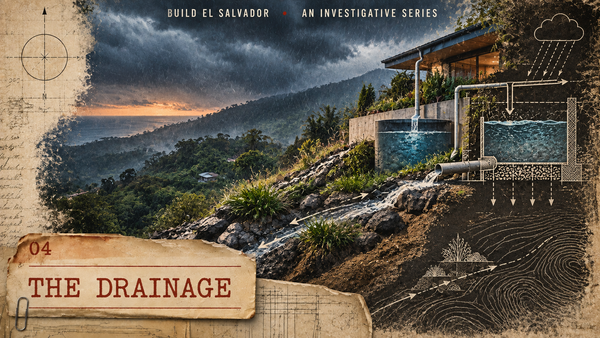
The proposed building area occupies the higher ground along a ridge, while much of the remaining property falls away below it.
At first, that seemed helpful.
Gravity could carry wastewater away from the house toward a treatment and infiltration area at a lower elevation.
But Investigation 04 had already established that water on this hillside has to be managed carefully.
During the wet season, enormous amounts of rain can fall onto the property. Stormwater has to be controlled rather than simply allowed to accelerate downhill, and the geotechnical investigation had warned against uncontrolled saturation around the building area.
A wastewater system would deliberately introduce more water into that same landscape.
Not during a storm.
Every day.
So the question wasn't simply whether wastewater could be moved downhill.
It was whether there was a suitable place for the ground to accept it.
That would depend on the permeability test and the groundwater beneath the proposed infiltration area. The current Ministry of Health process for individual systems using soil infiltration also requires groundwater conditions to meet its criteria.
Standing on the ridge couldn't answer that.
The testing would.
But there was another constraint the buyer hadn't accounted for yet.
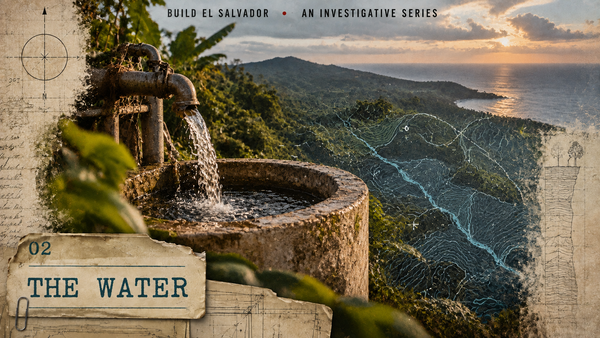
Investigation 02 had looked beneath this property for groundwater.
The regional hydrogeological evidence was encouraging. Geological fractures crossing or near the property could provide pathways for groundwater, enough to conclude that drilling a well remained a realistic option.
But a fracture on a map isn't a well.
Until a drilling location is selected and a productive borehole is established, the buyer doesn't know exactly where the future potable-water source will be.
That uncertainty hadn't stopped the water investigation from passing.
Now it mattered again.
Under the Ministry of Health's procedure for individual blackwater and greywater treatment systems, an absorption well or infiltration trench must maintain at least 15 meters of horizontal separation from a potable-water well.
Fifteen meters sounds modest.
On a property map, it isn't.
A 15-metre separation zone around one possible well location removes part of the property from consideration for wastewater infiltration.
If the well moves, the separation zone moves with it.
So does the potential wastewater area.
Then there is the house.
The property boundaries.
The steeper portions of the slope.
The stormwater plan.
The parcel hasn't become smaller.
The usable part of it has.
The buyer could have enough land for a house, enough land for a well and enough land for a wastewater system.
That didn't necessarily mean all three would fit in the places where they needed to be.
From the beginning, the question had seemed simple.
Where does the septic system go?
But there wasn't enough information to answer it yet.
Not because the investigation had uncovered a reason septic couldn't work.
It hadn't.
The problem was that one of the pieces was still moving.
The well.
If a productive well could be positioned in one part of the property, the wastewater system might fit comfortably somewhere else.
If the viable well location moved, the available infiltration area could move with it.
That changed the original question.
The buyer couldn't determine the wastewater location without considering the future potable-water source.
And the well couldn't be treated as a completely independent decision without preserving a safe place for wastewater.
They had to be designed together.
The next steps were now clear.
Test the proposed wastewater area for permeability.
Establish the groundwater conditions.
And coordinate those results with the eventual well location before either system was finalized.
Nothing uncovered so far gave the buyer a reason to conclude that couldn't be done.
But until those pieces were put together, it remained a condition of building on the property.
BUILDABILITY: PASS—WITH CONDITION
The investigation found no reason this property cannot support a wastewater system, provided the proposed infiltration area passes the required field testing and the well and wastewater system are designed together.
But finding the right place for the well is only part of the problem.
Once the water is found, it still has to be brought out of the ground.
And that takes power.
There is electricity at the road.
But is there enough to run everything this property needs?
INVESTIGATION 05 · THE SEPTIC—COMPLETE
3 QUESTIONS REMAIN
This is Investigation 05 of CAN I BUILD HERE?, a Build El Salvador series following the real-world due diligence behind a potential land purchase in El Salvador. Interested in sponsoring this investigation or a future installment? Become a Build El Salvador sponsor